Hola! This second last entry is related to the Future of Internet and it was a pretty interesting lecture by Mr Choy.
To most of us innovation could be just a spark of idea that leads to a successful product or business. But did you know that there actually 4 categories of innovation?
The success of an innovation is dependent on how well defined the problem and domain are.
The first category, breakthrough innovation refers to a well defined problem but an unclear problem solution. This type of innovation is considered as revolutionary science. Example would be the discovery of DNA structure.
The second category, sustaining innovation refers to a well defined problem and solution. An obvious brand of sustaining innovation would be Apple.
The third category, basic research, refers to a poorly defined problem and solution. This type of innovation is a daily occurrence at Research & Design labs where the goal is to discover more about about how things work.
And the final category, disruptive innovation, refers to a poorly defined problem BUT a well defined solution. This type of innovation could also be known as new approaches to old services or products.
Here are some videos that can help to explain this concept even further.
First there was Web 1.0, then came Web 2.0 and now we are looking at the Internet of Things (IoT).
Internet of Things?
The Internet of Things refers to the rapidly growing network of Internet-connected objects that are able to collect and exchange data using embedded sensors. These objects can be any stand-alone and Internet connected devices that can be monitored and/or controlled from a remote location. A wide variety of appliances can fall under this scope; air-conditioning systems, lights, cars, refrigerators, heart monitors, wearable technology, smartwatches, smartphones, PCs, tablets, laptops and many more.
Now that I have given you some examples, you might be wondering if there are any other devices that could be part of the IoT. Maybe food that tells you the amount of calories and other nutritional factors it has? Not so soon, buddy. Maybe in the future, okay?
However, what if I told you your house, yes, that brick and mortar house, could be a part of IoT? Not that your house is going to become a Transformer or something. But at this moment, the Smart Home is the most popular IoT application. It is affordable for most and is already out on the market. The name given to this Smart Home application is, Amazon Echo and it works via its voice assistant, Alexa. Homeowners can talk to Alexa to perform a huge range of functions. They can tell Alexa to provide news reports, play music, order a Grab car, control lights and other devices, order you a PIZZA (yay!) and so much more. Watch this video if you don’t believe me.
Now, let’s up the scale, shall we?
Take a look at Barcelona. This city isn’t only famous for its star player, Lionel Messi, but for also being a Smart City. When Spain was hit by the 2008 recession, Barcelona attempted to ease through the difficulty by harnessing technology to “transform itself into a model of data-driven, sensing, smart system”. 12 areas were identified for intervention; some of which include energy, waste, transport, water and open government.
Some of the inventions that sparked my interest were those catered for their drivers. Among multiple fascinating inventions is ApparkB, a special senor system that guides drivers to available parking spots. These sensors have the ability to sense whether or not there are parked vehicles in any given parking lot and then guide drivers to open lots. This implementation has hugely reduced congestion and emissions.
Another simultaneous implementation was the Barcelona Lighting Masterplan which utilizes smart technologies to boost the efficiency and usage of city lampposts. 1100 lampposts were transformed to LED which greatly reduced energy consumption and these lampposts were modified to sense the presence of nearby pedestrians.
When the streets were empty, the lampposts were programmed to automatically dim to conserve even more energy. That’s not all, the lampposts are also part of Barcelona’s WiFi network. They provide “consistent, free Internet access throughout the city.” And if these are enough, the lampposts also collect data regarding air quality, relay information to city agencies and to the public.
In total, IoT has done wonders for Barcelona.
$58 million was saved on water
$37 million was saved through smart lighting annually
Increased parking revenue by $50 million annually
Created 47,000 new job vacancies
Still doubting IoT’s prowess? Jump on the wagon today!
Is this the future that this Oscar winning trilogy was referring to? Well, maybe. But maybe not so spot on with the time travelling part. But hey, in the near future, perhaps?
In this week’s lesson, we learned about the future of Internet. We have come a long way since the discovery of Internet and Web 1.0. I am not going to bore you guys with facts about Web 1.0 and 2.0. So let’s dive straight into Web 3.0!
Web 3. 0 can also be characterized as the new generation of the Web and an intelligent Web. It is a technology comprising of a semantic web, natural language search, data-mining, machine learning, more open and connected applications, distributed databases and autonomous agents. Here, the emphasis is on machine-facilitated understanding of information so as to enhance users’ productivity and experience.
So, why is Web 3.0 called the semantic web? Well, the word semantic itself implies meaning or understanding. As such, the Semantic Web is concerned with the meaning of data.
As you can see above, the word mammal can certainly refer to any animal under that category So, how does the Internet provide information about the exact mammal a user is searching for?
This is where Inference comes in. Inference on the Semantic Web is characterized by “discovering new relationships”. On the Semantic Web, data is archetyped as a set of agreed upon relationships between 2 resources. “Inference” means that automatic procedures can produce new relationships based on the data.
What Inference is Used For?
You maybe wondering what Inference is used for. Inference on the Web is a tool to enhance the calibre of data integration by identifying new relationships, inspecting the content of the data, or overseeing knowledge on the Web. Inference based techniques are vital in identifying prospective irregularities in the integrated Web.
Click on these links below to understand Web 3.0 further.
Today, we live in a multimedia world. But what does multimedia even mean? I am sure you have come across that term but you just can’t put on your finger on it right? You roughly know what it refers to but you are unable to exactly spell out what it means?
Well, multimedia is an umbrella term involving computer-based interactive communication processes that comprise of graphics, text, sound, animation and video. A multimedia device is a tool or piece of equipment that allows a user to experience several types of digital media at once. A familiar example for a uni student like you would be Microsoft PowerPoint. It basically incorporates everything that I mentioned above. A key feature of any multimedia application/device is its interactive component. The basic function of anything multimedia is to allow interaction between/ for users.
Still image
Just look around you. Without a doubt, I am sure you are surrounded by multimedia devices and applications. Your handphone, television, laptop, iPod, gaming device are just some of the multimedia devices we live among. Even this entry is going to be bombarded with multimedia.
Over the years, humans have integrated such devices and applications into their lives in one way or another. We have come so far with multimedia that it even creates knowledge connections, individualized and multi-dimensional experiences. Therefore, I have to reiterate that we live in a multimedia world. If you are not going to be part of it, then you are going to end up like the guy below.
I hope you have more or less grasped the concept of multimedia. But that’s not all. Two newcomers have joined the family and boy, these two are much more dynamic than their predecessors.
The first newcomer is Virtual Reality, a 3-dimensional computer generated environment that allows users to explore and interact with. Thus, users become a part of this virtual world and will be able to manipulate objects or perform actions while in this environment. The above image depicts a user wearing virtual reality goggles while playing a racing game. This allows the player to be one with the game, simulating an actual car race. Other virtual reality gears include data gloves, head mounted displays, data suits, workbenches and joysticks.
Here is a list of virtual reality games that you can try to understand VR a little better.
Now, moving on to the second newcomer, Augmented Reality. AR is a form of technology where computer generated images are superimposed onto objects as a form of enhancement. It supplements reality by creating an illusion that virtual and real objects coexist in the same environment, as opposed to Virtual Reality which fully immerses users inside a synthetic environment disallowing them to see the real world.
View this video to see how Augmented Reality works.
You may not realize this,but most of us have been addicted to one of the forms of AR and that is none other than
.
.
.
.
Pokémon Go is an Augmented Reality game that combines the real world with a virtual world. The game uses your phone’s camera to show you the current environment and overlay virtual creatures on top of it. Considering the popularity of Pokémon Go, AR is here to stay.
Besides gaming, AR can be used to make your purchase decisions, for educational purposes, visualize property development and even aid medical diagnosis.
Well, here’s to more innovative and futuristic multimedia!
Yea I am not referring to the condom brand, Trojan. But I am actually referring to viruses, worms and phishing scams.
In this week’s class I learned alot about the dangers lurking on the Internet and the Internt insecurity that is grappling our daily usage. Every year, the rate of cyber crime is on the rise and it is specualated that the losses will reach a startling$2 TRILLION by 2019!!!
If that doesn’t alarm you, you are probably a worm. So what is this worm I am talking about? Definitey not those slimy, disgusting suckers. Rather, these computer worms are self-transmitting programming codes (series of instructions) that replicate themselves over a computer network and engage in malicious actions like shutting down a computer’s system or using up its resources.
A computer virus on the other hand is a programming code that is often introduced into a computer system without a user’s knowledge but with the intentions of corrupting the system, overwriting/damaging software or destroying data. Viruses have the ability to attach themselves to disks, replicate themselves and ultimately wreak a destructive payload. Although not all computer viruses are malicious, MOST of them do “infect” computer systems and cause damage. Highly common formats are: Java codes, HTML codes, hidden applets and text documents.
If you are still unsure, the main difference between a computer worm and a virus is that a virus requires a host (another program) and needs someone to distribute the infected program. Perfect examples would be device sharing (infected thumbdrives) and via email attachments or links.
On the other hand, worms don’t require a host, can distribute themselves through emails (usually) and replicate themselves.
Moving on, a Trojan is a malicious computer program that is used to hack into a computer by acting as a benign application and misleading users of its true intention. An example would be a fake Facebook login page.
OR a fake claim from a bank which requires users to verify their information. So when they login with their ID and password, the Trojan sends a command to hang their computer and steals their details or introduces viruses onto their computer.
Generally, Trojans do not propogate themselves but they are as equally destructive as viruses. If installed or run, Trojan will have unlimited access of users’ computers and the payload could vary according to the attacker’s motives which could be:
Destructive (crashing/modification/corruption/spying on user activities),
Data theft (user passwords/credit card information/industial espionage),
Spying, surveliance or stalking (keystroke logging/ viewing user’s screen or webcam)
Avoid programs or application files if they aren’ from trusted sources, for example pirated softwares on CDs.
Do not click on email attachments or links if the sender is unknown or if it seems suspicious. Trust me, no bored housewife is going to send her nudes to you.
Keep backups of all your essential data and have a clean startup disk available at all times.
Install anti-virus software, firewalls and for more important messages/information such as company information, always encrypt them and use virtual private networks.
And lastly, #4 wouldn’t be useful if you don’t update your anti-virus software or other programs such as Java or Adobe. Installing updates whenever they are available will strengthen your protection because security patches and updates are meant to detect the bugs and fix vulnerabilities and loopholes. SO, ALWAYS INSTALL SECURITY UPDATES AND PROTECT YOUR COMPUTER FROM MALICIOUS ATTACKS!
This week we learned about tools that Google offers. One particular tool resonated with me and that is
I have been an avid consumer of YouTube since the site’s launch back when I was still in Primary School. It has so many entertaining content and I am sure I don’t have to rave about YouTube’s glory to you guys since you all are probably as hooked as I am. Perhaps I could interest yall with some little known facts instead?
Did you know that the inspiration for YouTube was actually from Janet Jackson’s misfortunate (or in this case, so damn forutnate) nipslip during the 2004 Super Bowl live performance? The founders of YouTube tried looking for clips of that incident online but their failure resulted in the multi-million dollar video-sharing site.
So how does YouTube and YouTubers or CONTENT CREATORS as they are formally known, make money? Firstly, creators got to accept YouTube’s advertising guidelines and then connect with ADSENSE- which is YouTube’s partner program. Basically, it is a content for advertisement exchange.
This is how AdSense works- There is a 45/55 split for all content creators, so Google keeps 45% of all YouTube advertising on videos and creators get the remaining 55%. The average cost per thousand (CPM) for YouTube is $7.60. That means that for every 1000 views a video gets, it would earn $7.60. A video like Gangnam Style with a billion views (initially) would earn $7.8 million.
No wonder there are a crazy amount of content creators whose main job is creating videos for YouTube. However it definitely isn’t easy to constantly engage and interest countless sunscribers.
Enough about other YouTubers, why not check out a video that I personally had written the script for, filmed and edited. It is a promo video I did for my previous school’s CCA. Enjoy!
Well, how was it? This video may seem simple and probably not very time consuming right? WRONG. The scripting part was the easiest bacause things are obviously easier when they are in your head. During filming, I had to single handedly man the camera and the sound equipment. Also, since it was filmed in the evening/night, I had to constantly monitor the light settings and try not to get slammed by the flying balls. The most nervewrecking moment was when I was literally squatting behind the net to get the perfect shot of the tchoukball bouncing off the net (1:34).
The editing process was even more tedious because I had repeated misgivings and I would keep revising my edits so that shots flowed better. And don’t get me started on the subtitles. We aren’t all gifted with perfect pronounciation and enunciation. I had to repeatedly hear what the coach and captain were saying just to accurately subtitle them. By the time editing was done, I was so sick of listening to their commentary and the background music over and over again. It was indeed a stressful 2 week process but yet, I relish every moment of it. Also, I was really happy and proud whenever my video aired on the school television channel.
You guys have been following my blog for a few weeks and it’s time I get to know more about ya’ll. I assume you are tertiary students studying at some constantly over-crowded school.
*Ahem SIM*
What if I told you that you can actually get a degree online? Seems kinda shady right. Almost as if you are paying for a counterfeit certificate.Well with E-Learning, this is another impossible that the Internet has broken.
E-learning refers to learning that is facilitated by the use of digital tools and content involving interactivity-either interaction between a learner and teacher or between peers. Multiple forms of E-learning exist currently; virtual classrooms, online learning which incorporate audio, video and graphics/ animation, rapid e-learning, simulation and game based e-learning, mobile learning and finally the form we are most familiar with: Learning Management System. UBlearns and BlackBoard will fall under learning management system.
So, what are the benefits of e-Learning, you ask?
First and foremost, the convenience and access e-Learning bestows upon users has to be the most appealing factor. Imagine being able to take courses or even a full fledged degree program form the convenience of your home! Furthermore, e-Learning allows for better integration for part-time students and facilitates enhanced communication between students and professors when consultation opportunities to meet face-to-face are sparse. E-learning content can also be accessed from long distances which means that geographically dispered audience have ease of access too.
Include flexibility and it has to be the best option out there. Moreover with For those result-oriented people out there, there are multiple case studies which highlight the improved performance of e-Learning. With computer/mobile based instructions, students are able to learn more in less time and they are seen to have developed a more postitive attitude towards technology. Besides, with e-Learning, users independently solve problems and there are no age limitations on difficulty levels so students can progress on their own pace. Most importantly, students get to work on their digital literacy skills which are definitely required and expected in their modern, 21st century career.
Another case study shows that “computer intensive” environments elevate “student-centric, cooperative and higher order learning, writing skills , problem solving, and using technology. One noteworthy example would be the studywhere medical students from University of California Irvine used iPads for educational purposes and that helped them score 23% higher on their national examinations as compared to classes that did not do so.
(Click on the link above to read about the study)
Well, that’s it for today. So remember, age should never be a barrier. With e-Learning, there are no obstacles for lifelong learning. Check out the links below if you want to know more about online education.
Are you like me? Are you hooked to the Internet? Do you live and breathe the Internet? Do you even do your shopping on the Internet? Because obviously actually lifting yourself to the shops is so passé. And besides with the Internet, you no longer have to deal with annoying salespeople who follow you around constantly and give you the blackest of faces if you leave the store empty handed.
So if you are familiar with any of the above, then you would have some sort of inkling about words like “online shopping”, “E-commerce” or “E-business”. They seem to be revolving around the same idea right? So technically they mean the same thing right?
WELL NO. You are as clueless as Jon Snow.
I will admit, I knew nothing prior to this week’s lecture too. Since now I am obviously all smart and cultured, let me dish out some knowledge.
E-Commerce refers to the process of buying and selling products or services electronically. When I say ‘electronically’, it does not only apply to the Internet platform. As such, even the ATM is a form of e-commerce. There are 2 aspects involved: the buying from suppliers and the selling to customers. The nature of market relationships matters too.
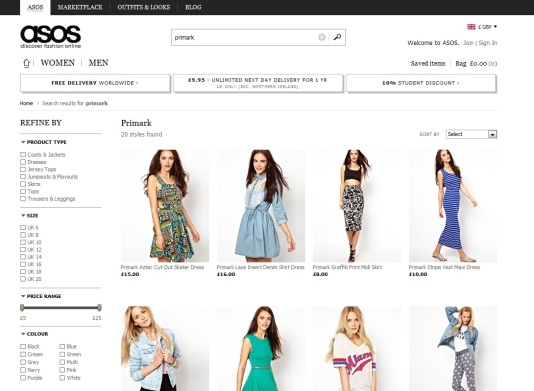
For example, there is Business-to-Consumer (B2C)→ sites like Asos, Qoo10 and eBay where business transactions are carried out directly between a company and consumers who are the end-users of its products or service.
Then there is Business-to-Business (B2B) → examples such as AliBaba or from last week’s blog post, social media managements, which focus on the exchange of products, services or information between businesses, instead of the traditional B2C.
Lastly there is Consumer-to-Consumer (C2C) → examples like Carousell and online auctions where the business transaction occurs between 2 consumers.
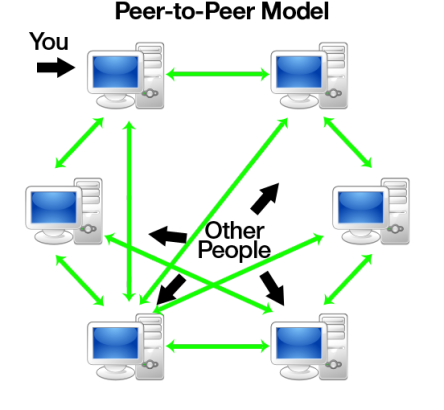
The type of technology used also helps to classify the types of E-commerce. There is Peer-to-peer (P2P) where computing or networking is a distributed application architecture that partitions tasks or work loads between peers. Peers have equal rights and are equipotent participants in the application.
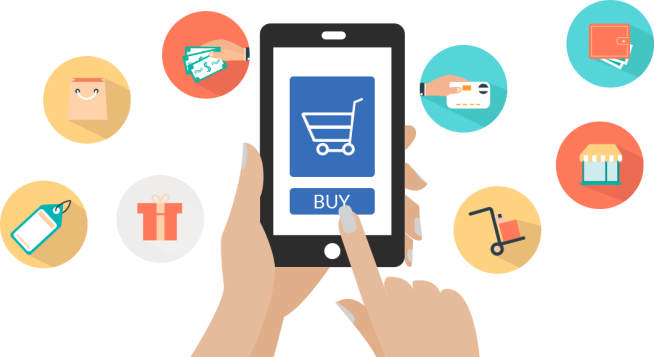
On the other hand, there is Mobile commerce (M-commerce) where the buying and selling of goods and services is done via wireless handheld devices such as handphones.
Let’s move on to E-business. In essence, E-Commerce is a subset of E-Business. Thus, EB also follows the e-commerce process BUT with the additional use of Internet or other digital technologies for carrying out internal business applications and liasing with suppliers and partners. For example, an E-Business could leverage on the Internet to perform inventory or even accounting. It isn’t only about buying and selling.
If you would like to gather even more insights in this field, check out this videolink.
This post is for the aspiring entrepreneur homies out there. Are you looking to start up your business enterprise or rather looking to take your existing small business to another level? Follow along and you just might chance upon essential tips to earn big bucks.
If you exist in the 21st century, then you will defnitely be well-versed with the power of Internet and how far its reach goes. You would also have noticed how the retail industry is shifting to a highly online platform where companies leverage on social media to promote their products or services. Now, why are businesses shifting platforms? Has traditional retail taken a plunge for the worse and why is social media crucial to businesses?
In this day and age, social media has ultimately changed how businesses attract and interact with customers, how they exchange their goods and services and fundamentally do their business. The impact of social media is far beyond comprehension and embracing social media is the only way to sustain your company. So, why is social media crucial to your venture?
#1: Gain essential customer insights with Social Media
With Social Media, you can learn and understand who your customers. A crazy amount of data is consitently being generated by Social Media- the demographics of your current/potential customers, their purchase patterns, what they are talking about your brand, how many people visit your online platforms and even how long they linger on them. Such analytics and measurement allow for business intelligence which contribute to multiple business decisions.
You may be wondering how on earth are you going to monitor so many customers and manage your business at the same time. Do not worry! All you have to do is engage Social Media Managements sites such Hootsuite, Alexa, Social Vantage or any other similar companies and let them manage your social media presence for you!
#2: Get inside scoop on your competitor~Competitor knowledge
Imagine that you own a bakery and you have a competitor RIGHT NEXT DOOR. What would you do? If it were up to me, I would engage the help of all my friends and family to spy on this bugger so that my goodies will always be one step ahead. However, with social media monitoring, you can learn vital information about your competitors without such obvious attempts. Continuing with the bakery example, you could register industry keywords (eg: bakery/ cake/ macaroons) onto your social media management’s search streams and simply monitor mentions of your ratchet competitors’ business or products. You can also register your own comany’s name and track what people are saying about your business. This is an example of social listening. By doing so, you can always improve on your deals, products and services.
#3: Build loyal relationships
Social media is a dynamic platform to fortify relationships with your customers. It is a 2-way channel where you can create brand awareness and have interactive dialouge with customers. Furthermore, your social media presence will facilitate an easier passage for customer service and round the clock support. Doing so only connects you closer and in turn increase brand loyalty and return customers.
I am sure platforms like “Facebook”, “Twitter” and several others will pop into your minds. In essence, yes, these are certain web applications that contribute to the term Social Media.
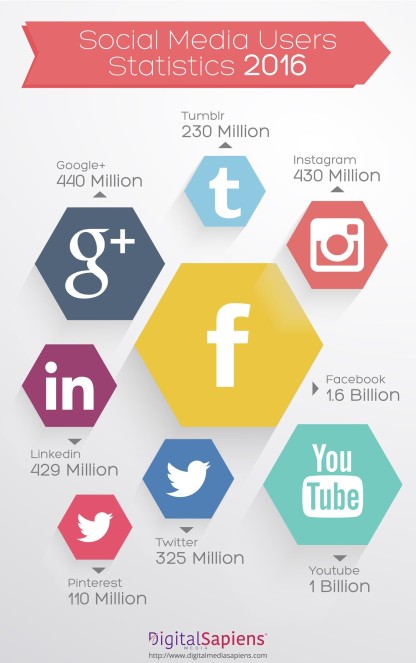
But in its true meaning, Social Media refers to digital media for social interaction which use greatly accessible and extensible publishing strategies. Such sites operate on web and mobile based technologies to shift communication into a more dynamic and interactive dialogue. Worldwide, a shocking 2.34 BILLION people use Social Media sites and mind you, there are 7.4 billion people as of now. So nearly 30 % of the total world population (made up of individuals, companies and organizations) are constantly creating, sharing and exchaning information within their vitual networks. Below is a statistical count various Social Media sites boast.
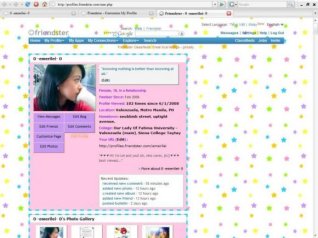
Now, Facebook, Instagram, Snapchat are relatively newer platforms. But do any of you remember their predecessor, FRIENDSTER? Remember writing testimonials for your friends and spending hours scouting for the perfect backgrounds and themes?? And definitely not forgetting the “Thanks for accepting my friend request” comment we never failed to write every time someone accepted our request.
Friendster is a pioneer in social media networking. With a whopping $50 million capital financing and several million users at its prime, circa 2002, Friendster was the topdog that then startup sites such as Facebook and Myspace took inspiration from. So, what went wrong? Where has the site that shaped the modern social media landscape gone to? And how did Facebook gain the upperhand?
#1 Friendster was too rigid
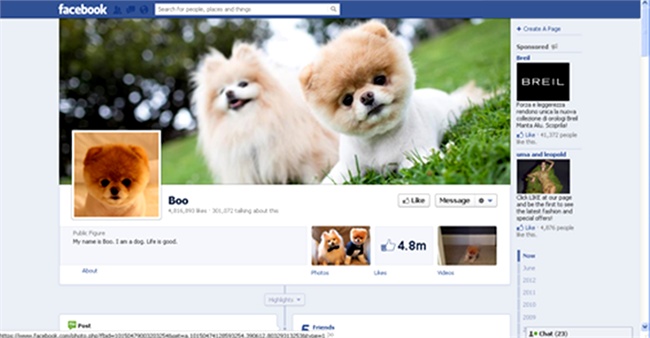
“Friendster had a very specific vision for how its product should be used, and it squashed any attempts by users to deploy it differently,” says Mike Fisher, the formal Paypal Executive and succedent entrepreneur. Friendster was a site where users could lavish on their profiles and leave comments on their friends’. Other than that there was not much more one could do. This restricted other out of the box ideas users had. One such example would be creating profiles for pets. Today, just scroll past your Facebook or Instagram feeds and you are definitely bound to come across accounts users have created just for their squishy pooches and other furry friends.
Now Friendster had a very limited view on how it’s platform should be used. It did not entertain non-human accounts and wasted no time deleting such accounts. On the other hand, Instagram and Facebook have come to embrace them and even made it easier for users to create profiles for their pets by partnering with 3rd party applications like Catbook and Dogbook.
Facebook 1 – Friendster 0
#2 Friendster was not SOCIAL enough
The keyword in Social Media is social. However, Friendster was admittedly lacking in that area. Majority of the focus was in trying to make your profile stand out by customizing backgrounds, uploading cute photos of yourself and trying to get testimonials from your friends. It was desperately missing the point of any Social Media site: CONNECTION.
In contrast, Facebook totally owns the game with its newsfeed. Friends’ statuses and shares are prominently displayed which makes us feel connected and innvolved in our peers’ lives to some extent. Furthermore, the ability to like, comment and share gives Facebook another brownie point.
Facebook 2- Friendster 0
#3 Friendster failed to move on with times
The things you could do on Friendster are already mentioned above. However, Facebook continously revamps itself and keeps up with changing times. Initially it lured us with cute and addictive games like Pet Society, Tetris, Mafia Wars and many others. Then it introduced news feeds and discussions. Then it allowed videos and gifs. Also, you can tag almost anyone on anything which once again, affirms the idea of connection. Well if this is not an excellent game plan, I don’t know what is.
Facebook 3- Friendster 0
Well, Friendster, you were good till you lasted. Bye for now!